

Top 5: Sensory Trees for all to enjoy
Sensory tree gardens focus on trees as primary tools for non-visual engagement, using size, leaf form, bark texture and scent to support orientation, learning and enjoyment. Design emphasises clear routes, contrasting tactile cues at waist and knee height, and repeatable locations for signature trees so people who are blind or have low vision can build reliable mental maps. To coincide with World Sight Day on Thursday 9 October, gardens can use guided multisensory tours and interpretive markers to raise awareness of access needs and demonstrate how sustained contact with woody plants improves mood, reduces stress and supports memory and cognitive focus.
Top 5 Trees for Fragrance:
- Azara microphylla – Vanilla Tree
- Eucryphia var. – Tasmanian Leatherwood
- Kunzea ericoides – Native Kanuka
- Magnolia grandiflora var. – Evergreen Magnolia
- Michelia Lemon Fragrant – Compact Magnolia
Azara microphylla – Vanilla Tree
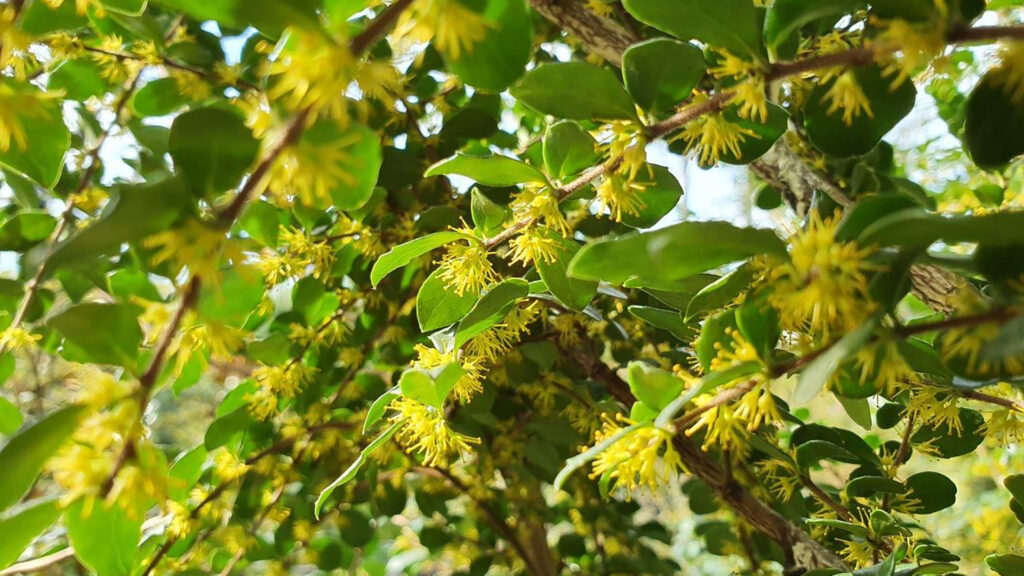
Azara microphylla is an evergreen shrub or small tree that grows to 5-6 metres high with a dense rounded crown. Leaves are very small glossy ovals about 10–30 mm long with smooth margins and a firm flexible texture that forms a compact surface along twigs. Young stems are smooth and satiny while older stems develop thin flaky bark that peels in small papery strips. Flowers produce a restrained honey-sweet fragrance with a faint green note; close to the spray you can detect vanilla and a mild apple-like sweetness, and crushing a blossom or rubbing a spray briefly intensifies the honeyed character and reveals a light citrus lift.
Eucryphia var. – Tasmanian Leatherwood

Eucryphia varieties are evergreen trees 3–8 metres high with an upright symmetrical form. Leaves are opposite, elliptic to lance-shaped, typically 50–120 mm long with a leathery surface; the upper side is slightly waxy and cool, the underside paler and softer. Bark is smooth on young branches and becomes fissured and flaky on older limbs. Large single white flowers emit a rich, heady floral scent dominated by gardenia and jasmine notes with a clean green sap undertone; at close range the perfume is creamy and opulent, at dusk the fragrance strengthens and can carry several metres, and crushing a petal brings forward the creamy heart while bruising a leaf adds a faint resinous-citrus top note.
Kunzea ericoides – Native Kanuka
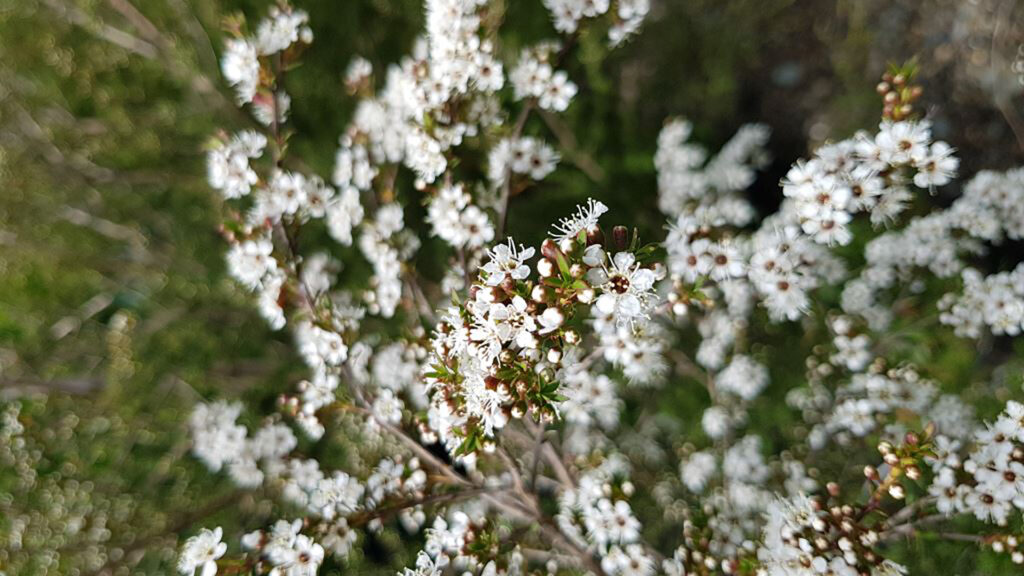
Kunzea ericoides is a fast-growing New Zealand Native shrub or small tree 3–6 metres high with a bushy irregular outline. Leaves are very narrow and needle-like, usually 10–30 mm long, soft to the touch with a fine downy surface. Young stems are slender and smooth and mature bark peels in papery layers exposing paler wood beneath. The scent is active and warming, combining manuka-type honey and spicy resin with a distinct lemon or bergamot top note; when flowers are massed the aroma reads sweeter and fuller, and crushing a leaf or flower sharply increases the citrus note and can produce a short camphor-like clarity.
Magnolia grandiflora var. – Evergreen Magnolia
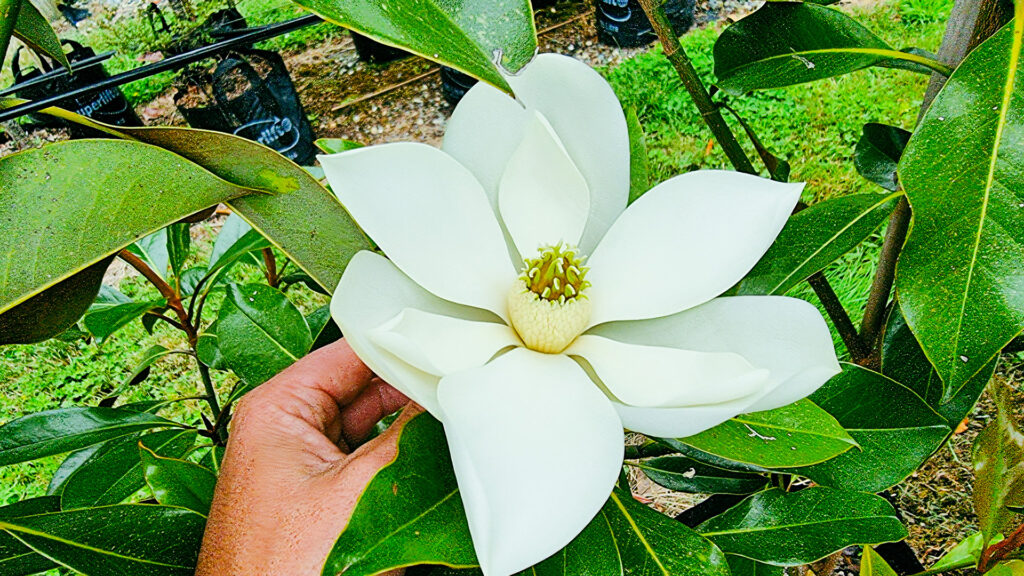
Magnolia grandiflora are large evergreen trees typically 5–10 metres high with a broad pyramidal crown. Leaves are large, thick and glossy, generally 120–300 mm long, obovate with smooth margins; the upper surface is waxy and cool, the lower surface paler and slightly downy. Young branches are smooth; mature trunks develop shallow fissures and coarse ridges. Flowers are very large and emit a powerful, creamy citrus-floral scent combining vanilla-cream richness with a lemony sparkle and a warm white-flower musk; up close the blossom is intensely creamy and sweet, at a distance the perfume remains full-bodied on warm days, and handling a petal releases a concentrated creamy core with a lingering citrus afternote.
Michelia Lemon Fragrant – Compact Magnolia
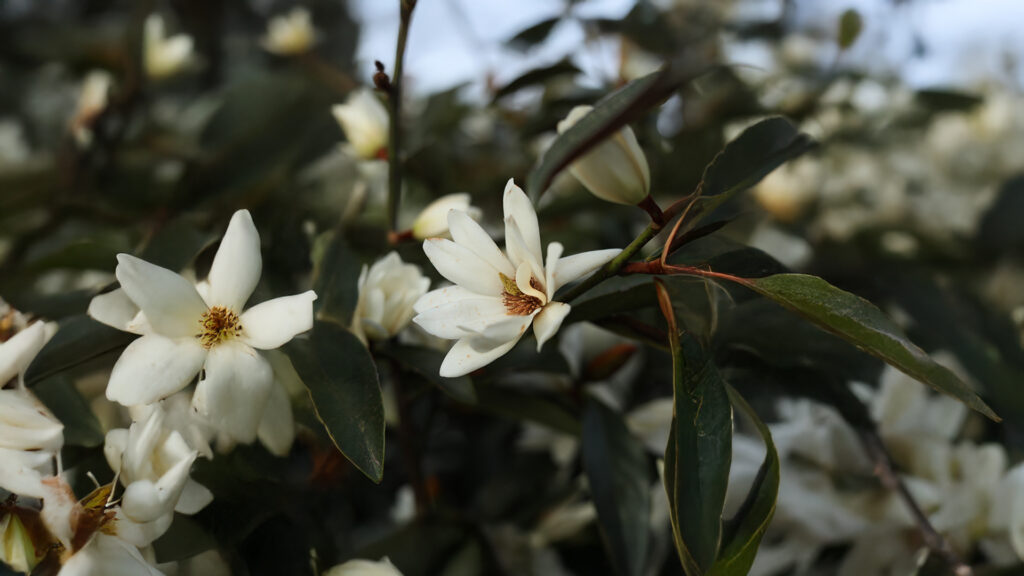
Michelia Lemon Fragrant is an evergreen shrub or small tree 5–8 metres high with a compact rounded crown. Leaves are elliptic and leathery, about 60–150 mm long, smooth and glossy. Branches remain relatively smooth and fine textured rather than deeply fissured. Flowers are conical to cup-shaped and give a pronounced lemon-forward scent over a sweet white-flower base; the initial impression is bright citrus like fresh lemon peel followed by a sugary floral heart, and crushing a petal or leaf releases an immediate burst of lemon oil that quickly settles to a lasting sweet floral note.
Well planned sensory tree planting promotes independence, wellbeing and ongoing connection with nature by turning individual trees into repeatable learning landmarks. Regular guided interaction — feeling leaf shape, tracing bark and testing scent at bloom time — sharpens tactile and olfactory discrimination and helps people who are blind or have low vision gain confidence navigating outdoor spaces. To maximise benefit, choose trees with clearly contrasting textures and reliable non-irritant scents, cluster them to create recognisable aroma zones and plan for seasonal succession so there is always at least one strong sensory focus. Practical support from experienced suppliers or landscapers can help convert these principles into a planting plan with sensible installation and ongoing maintenance to keep sensory cues consistent for users, carers and educators.



Japanese Maples: Shape, Shade and Seasonal Colour
Team Spotlight – Meet Tory
How Trees Help Reduce Flooding Effects
Archives
- October 2026
- September 2026
- August 2026
- July 2026
- June 2026
- May 2026
- April 2026
- March 2026
- February 2026
- January 2026
- December 2025
- November 2025
- October 2025
- September 2025
- August 2025
- July 2025
- June 2025
- May 2025
- April 2025
- March 2025
- February 2025
- January 2025
- December 2024
- November 2024
- October 2024
- September 2024
- August 2024
- July 2024
- June 2024
- May 2024
- April 2024
- March 2024
- February 2024
- January 2024
- December 2023
- November 2023
- October 2023
- September 2023
- August 2023
- July 2023
- June 2023
- May 2023
- April 2023
- March 2023
- February 2023
- January 2023
- December 2022
- November 2022
- October 2022
- September 2022
- August 2022
- July 2022
- June 2022
- May 2022
- April 2022
- March 2022
- February 2022
- January 2022
- December 2021
- November 2021
- October 2021
- September 2021
- August 2021
- July 2021
- April 2021
- March 2021
- February 2021
- January 2021