

Top 10 Cold-Hardy trees
As a Garden Enthusiast on a frosty Winter morning, now is a great time to plant out that landscape. The trees and plants are safely sleeping and the air clear and fresh. Winter is the perfect time for planting and thinking ahead for soon to arrive lush Spring new growth and blossom. As a fourth-generation tree nursery business, we know this well! So, we have compiled these ten Evergreens – five Native and five Exotics, that consistently hold their foliage and structural form through subzero temperatures.
Here are our top 10 Cold-Hardy Evergreens, proven performers for the Deep South and cool conditions:
New Zealand Natives
1. Carpodetus serratus – Putaputāwētā NZ Native (Marbleleaf)
2. Cordyline australis – Tī Kōuka NZ Native (Cabbage Tree)
3. Griselinia littoralis – Kāpuka NZ Native Broadleaf
4. Nothofagus solandri cliffortioides – Tawhai NZ Native Mountain Beech
5. Pittosporum tenuifolium – Kohuhu NZ Native
Exotic Evergreens
6. Elaeagnus x ebbingei – Silver Laurel
7. Osmanthus fragrans – Sweet Olive
8. Prunus lusitanica – Portuguese Laurel
9. Quercus ilex – Holm Oak
10. Viburnum tinus – Winter Flowering
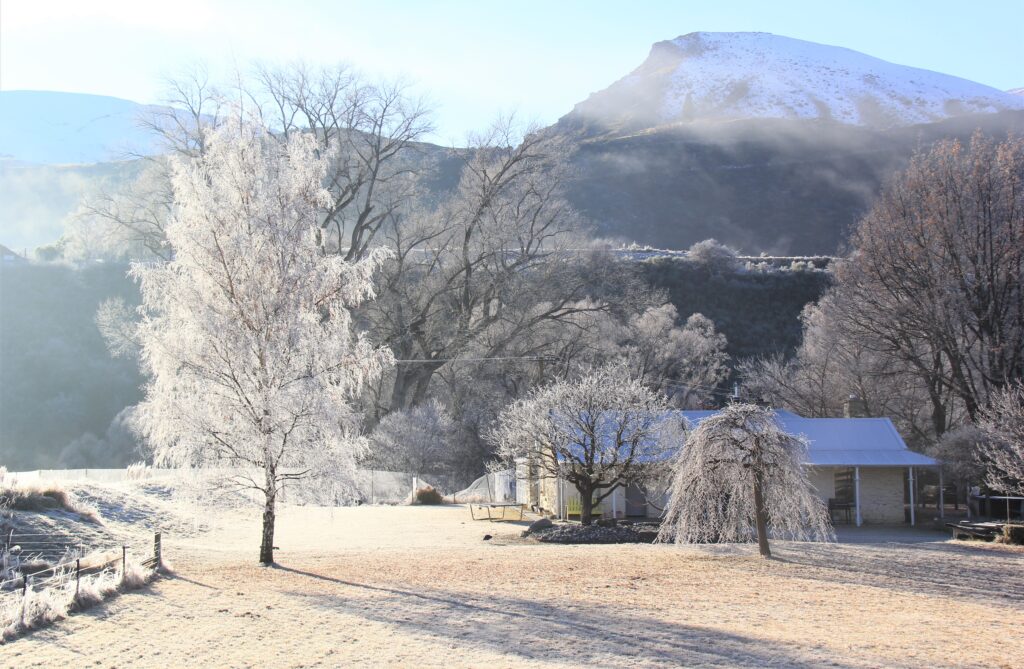
Winterscape – Queenstown
NZ Native
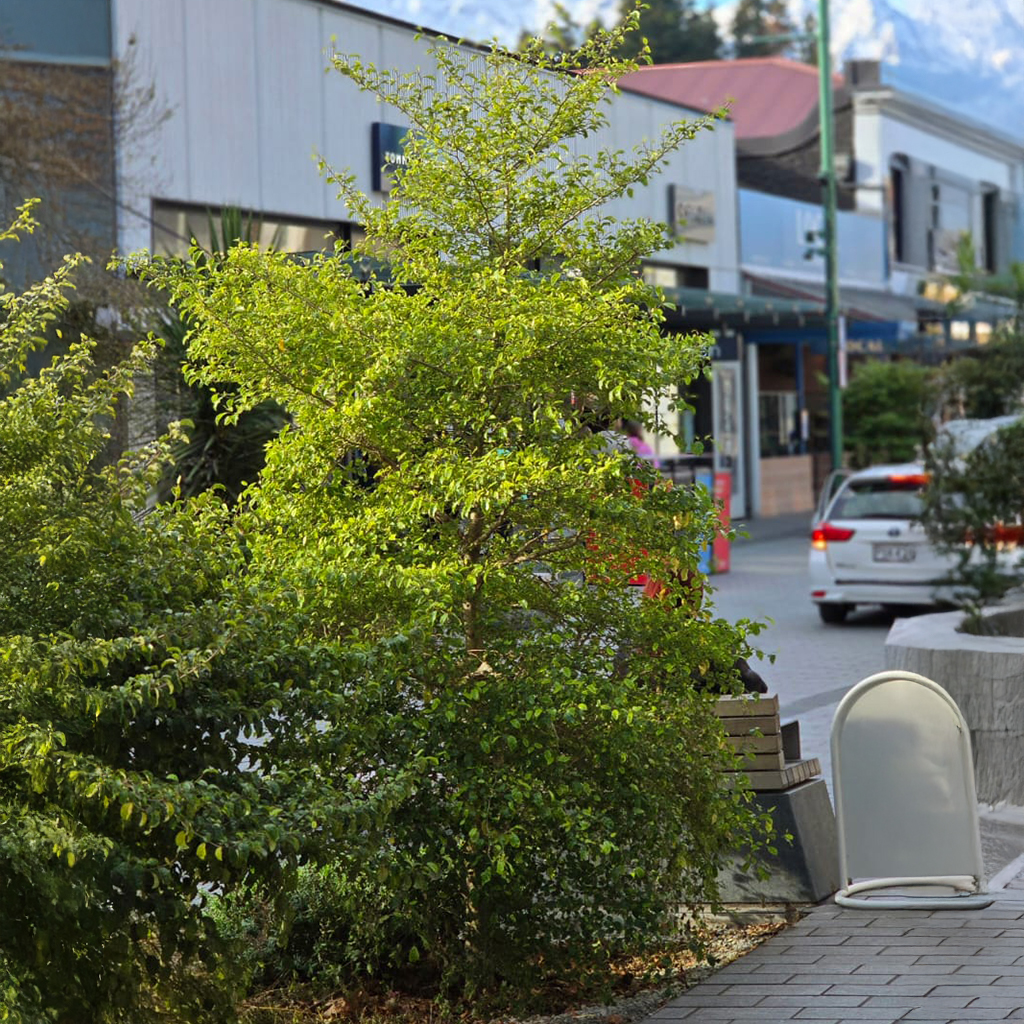
CARPODETUS serratus – Putaputāwētā NZ Native (Marbleleaf)
Thriving in frost-prone areas once established. Its flexible zig-zag branchlets and marbled leaves shed frost crystals with minimal damage. A generous layer of organic mulch around the base buffers root temperatures against freeze-thaw cycles.
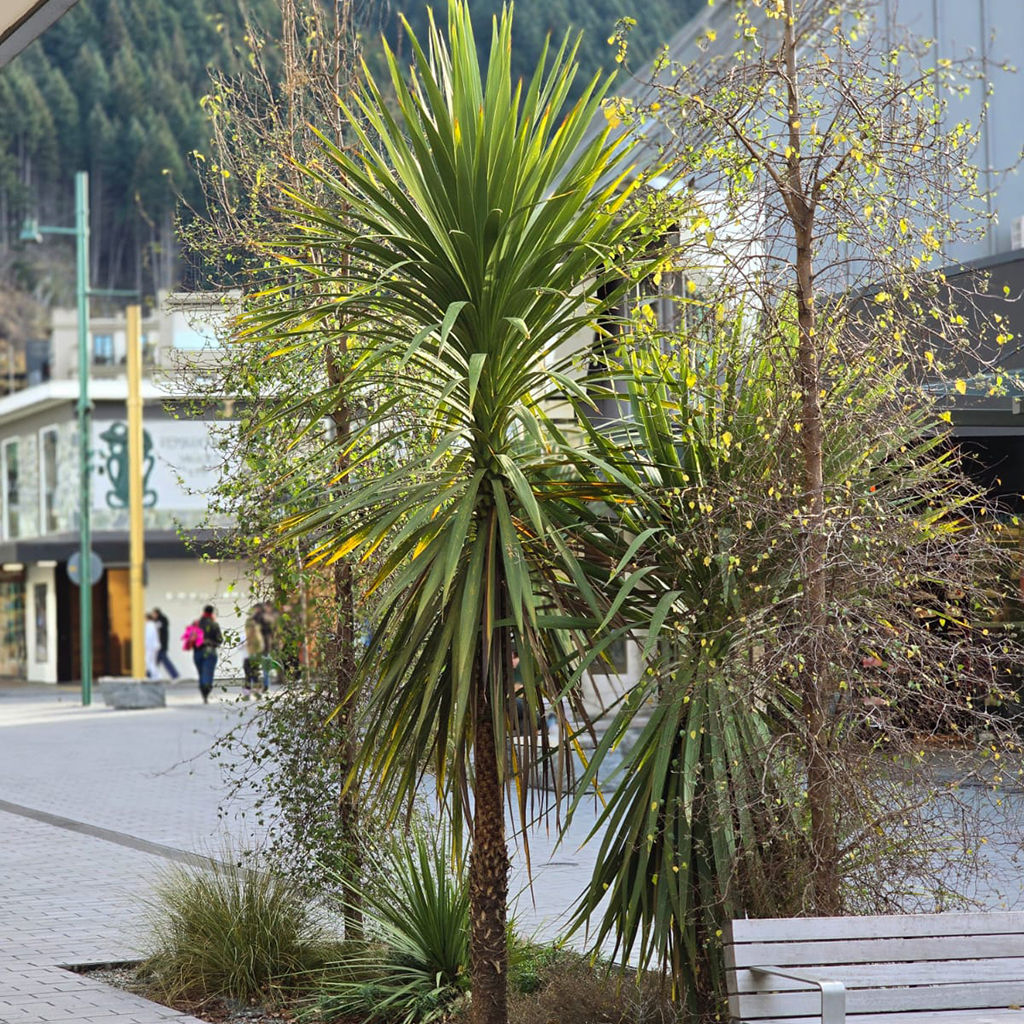
CORDYLINE australis – Tī Kōuka NZ Native (Cabbage Tree)
Enduring sudden temperature drops. In late Autumn, its leaves accumulate sugars that lower their freezing point. A note is not to pull off lower foliage, but trim in frosty zones. This acts as a under coat for stem protection.

GRISELENIA littoralis – Kāpuka NZ Native Broadleaf
Withstanding frosts in both coastal and inland sites. Its thick, leathery leaves resist ice formation, while a dense branching habit reduces wind chill. High salt tolerance also helps it recover rapidly after cold, sea-breeze events.
NOTHOFAGUS solandri cliffortioides – Tawhai NZ Native Mountain Beech
Naturally occupying cold tree-line environments and resists frosts when Winter-hardened. It synthesises cryoprotectant sugars that stabilise cell membranes through sub-zero exposure. Evergreen foliage endures frost and roots remain viable under snow cover.
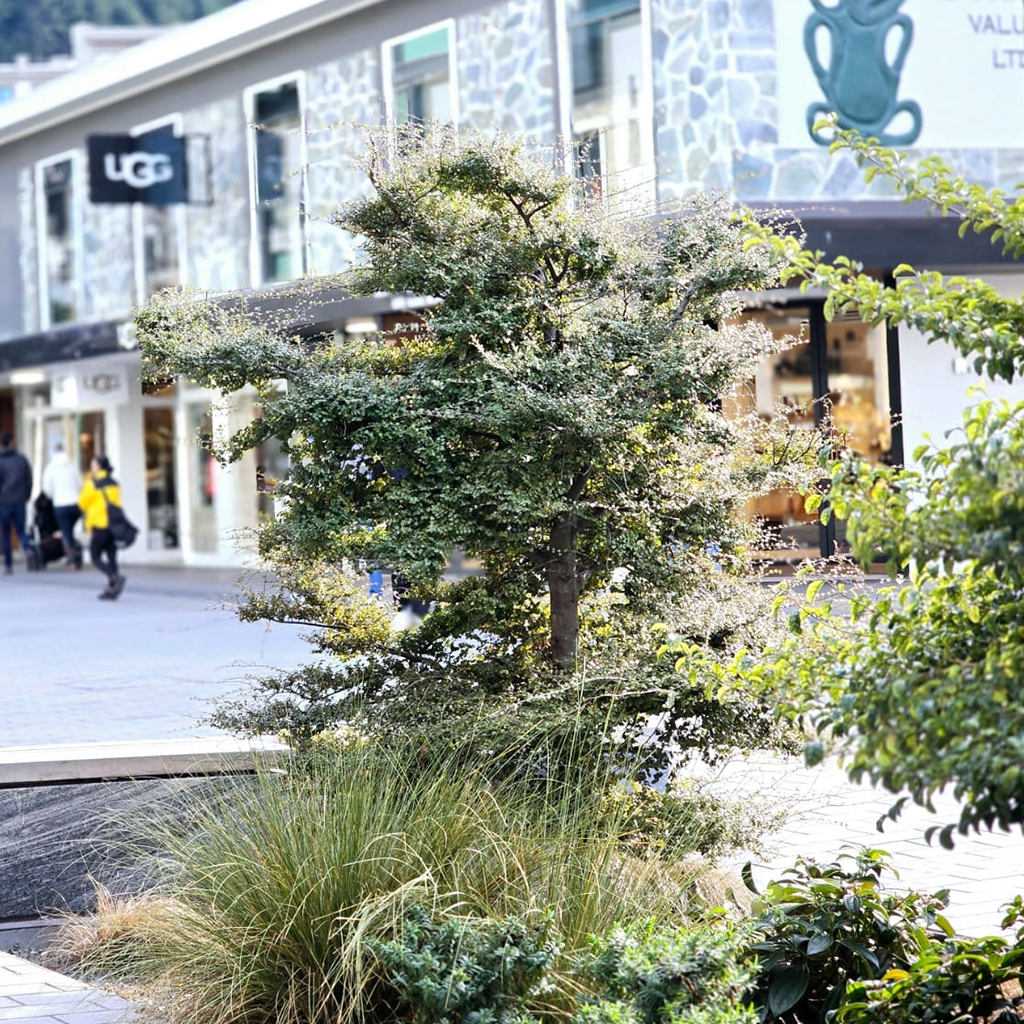

PITTOSPORUM tenuifolium – Kohuhu NZ Native
Making a reliable frost-tolerant hedge once established. Planted in free-draining, moisture-retentive soil and mulched 5cm deep, it weathers light to moderate frosts. Any browned new shoots are swiftly replaced by vigorous growth as temperatures rise.
Exotic Evergreens
ELAEAGNUS x ebbingei – Silver Laurel
A robust evergreen shrub prized for its silvery foliage and rapid growth. Its reflective leaves shedding ice crystals with minimal damage. A generous mulch around the base helps buffer roots against freeze-thaw cycles. It thrives in both full sun and sheltered spots, shrugging off coastal winds and urban microclimates.
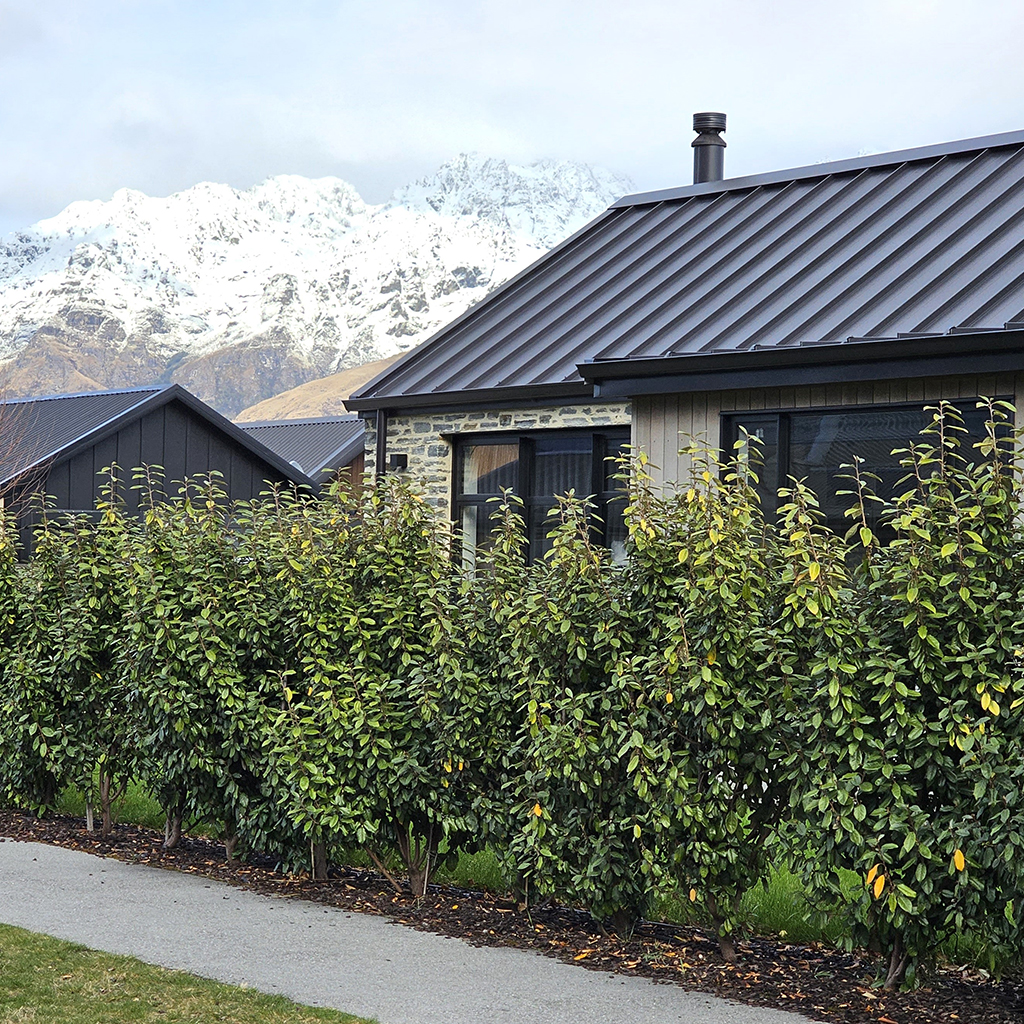

OSMANTHUS fragrans – Sweet Olive
Weathering moderate frosts, its dense, dark Evergreen foliage provides a frost. Position it in a sunny, sheltered spot to aid recovery and prune immediately after flowering to remove frost-killed growth. Tough Northern European plant that excels in frosty sites. Added bonus of clusters of small white beautifully fragrant flowers in mid-Summer.
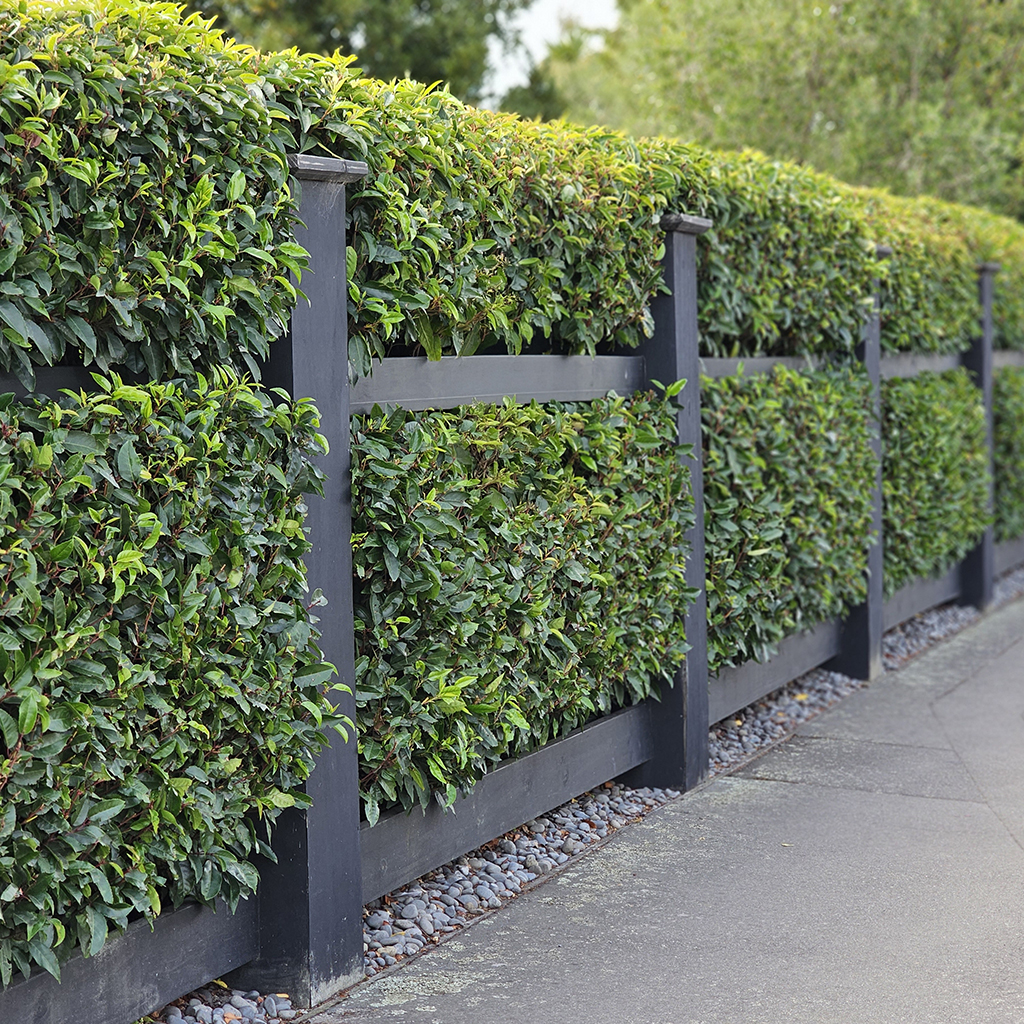
PRUNUS lusitanica – Portuguese Laurel
Its dense habit and glossy evergreen leaves make it a go-to hedge or screen for frost-exposed sites. A proven hardy and popular evergreen with its dark green foliage.
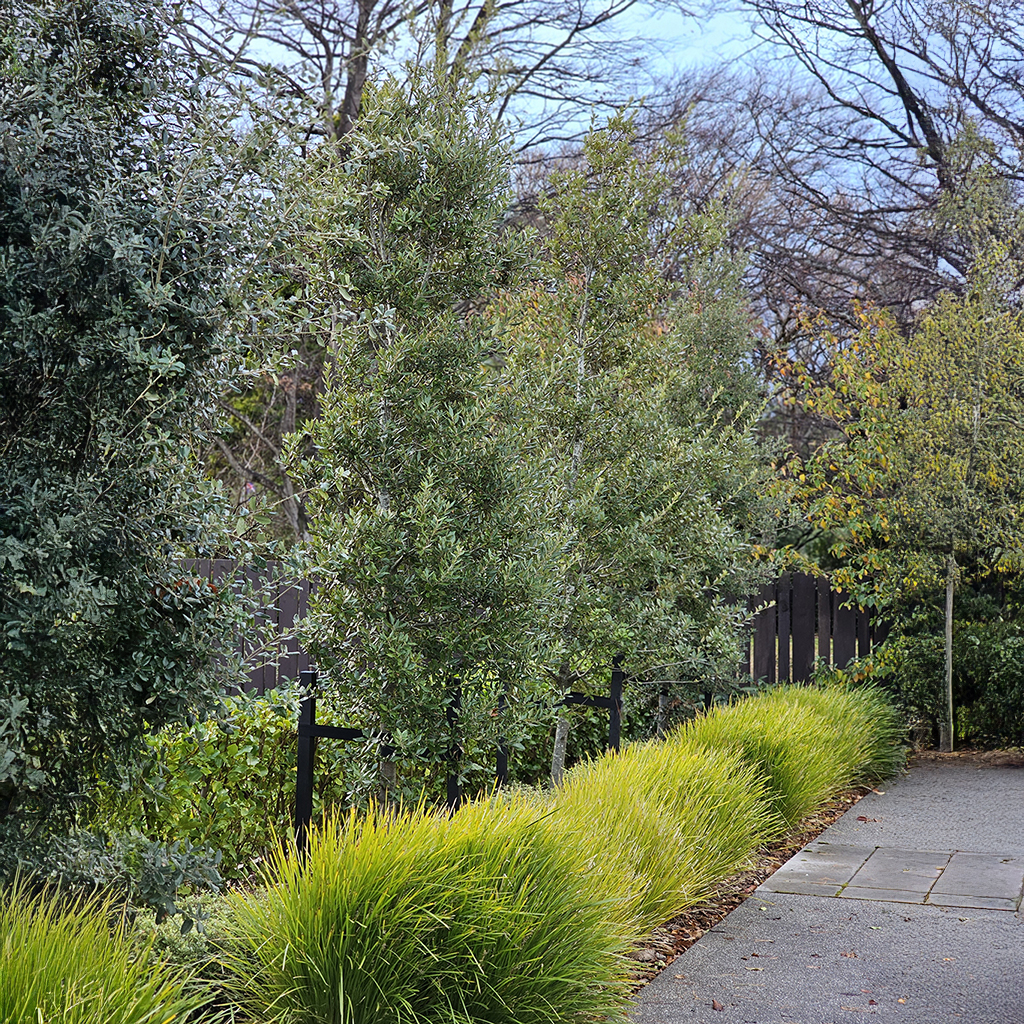
QUERCUS ilex – Holm Oak
Remarkably hardy, enduring sub-zero temperatures down to around -12°C. Its leathery, holly-like leaves resist ice formation, and an extensive root system accesses moisture beneath frost-bound ground. A beautiful hardy tree that trims well into a pleached screen or left to grow into a majestic specimen.
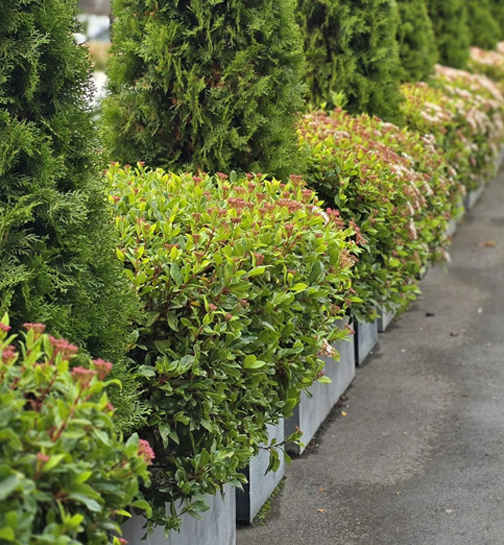
VIBURNUM tinus – Winter Flowering
Tolerates frosts to about -10°C and often blooms through light snow cover. Free-draining soil and a 5cm mulch layer prevent ice-heave around feeder roots, while sturdy stems resist frost-induced splitting. A light trim after flowering maintains shape without compromising its frost resilience.
In Southern conditions, these Evergreen species continue to perform
From the clean, structural lines of Mountain Beech to the architectural impact of NZ Cabbage Tree silhouetted against frost, they offer dependable form and seasonal interest. Silver Laurel creates a dense, refined hedge with year-round appeal, while other selections contribute texture, screening and Winter charm. Discover how these hardy options can bring clarity, definition and lasting value to your landscape. Whether you’re establishing a sheltered woodland, enhancing a courtyard with Winter fragrance or building reliable garden structure, our team is here to support you – from plant selection to expert guidance in planting and aftercare. Be sure to check out our tree guides page for other tips, suggestions and helpful advice https://easybigtrees.co.nz/tree-guides/

Team Spotlight – Meet Tory
How Trees Help Reduce Flooding Effects
Five Cherry Trees for Stunning Spring Blossom
Archives
- October 2026
- September 2026
- August 2026
- July 2026
- June 2026
- May 2026
- April 2026
- March 2026
- February 2026
- January 2026
- December 2025
- November 2025
- October 2025
- September 2025
- August 2025
- July 2025
- June 2025
- May 2025
- April 2025
- March 2025
- February 2025
- January 2025
- December 2024
- November 2024
- October 2024
- September 2024
- August 2024
- July 2024
- June 2024
- May 2024
- April 2024
- March 2024
- February 2024
- January 2024
- December 2023
- November 2023
- October 2023
- September 2023
- August 2023
- July 2023
- June 2023
- May 2023
- April 2023
- March 2023
- February 2023
- January 2023
- December 2022
- November 2022
- October 2022
- September 2022
- August 2022
- July 2022
- June 2022
- May 2022
- April 2022
- March 2022
- February 2022
- January 2022
- December 2021
- November 2021
- October 2021
- September 2021
- August 2021
- July 2021
- April 2021
- March 2021
- February 2021
- January 2021