

Spotlight on Winter Interest
With the shortest day now behind us and the slow return of light beginning, it’s the perfect moment to celebrate the trees that carry the landscape through the coldest stretch. Our Top 10 Winter Interest Tree Guide highlights species that shine when everything else steps back. Here are three standouts for late June.
Cornus alba ‘Sibirica’ — Red Stemmed Dogwood

Late June is when Cornus ‘Sibirica’ earns its reputation. Those vivid stems intensify in the cold, creating a bold contrast against frost, mulch or grey skies. The datasheet captures it perfectly: “The coral red stems form a flaming nest of warmth that looks especially good against snowfall.” It’s a brilliant way to bring colour back into the garden just as we move past the shortest day.
Why it works in Winter
- Fiery red stems for instant impact
- Ideal for mass planting or colour blocks
- Strong performer in cold climates

Cornus alba ‘Sibirica’ – Millbrook
Ilex ‘Hendersonii’ — Smooth Leaf Holly
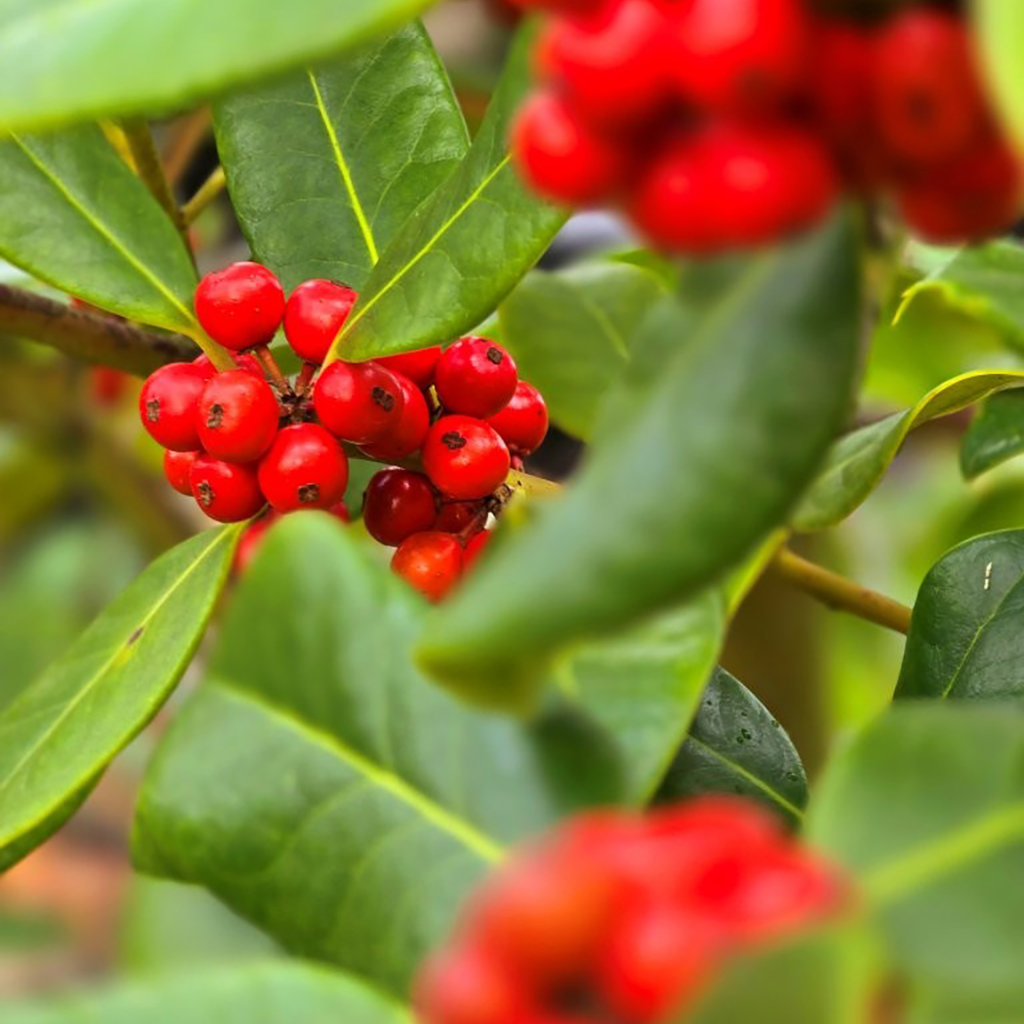
Ilex ‘Hendersonii’ brings a quieter, evergreen strength to Winter landscapes. Its smooth, dark‑green leaves hold their colour beautifully through June, catching what little sunlight there is. The datasheet notes: “Those smooth, dark‑green leaves shine in the sunlight… then give way to clusters of bright red berries in Autumn.” While the berries belong to the earlier season, the dense, glossy foliage provides structure and depth through Winter, making it a reliable choice for hedging, screening or adding year‑round form.
Why it works in Winter
- Evergreen foliage for consistent structure
- Glossy leaves that brighten low‑light days
- Ideal for hedging and formal planting

Linette standing next to a 35L Ilex ‘Hendersonii’
Prunus serrula — Birch Bark Cherry

Prunus serrula is one of Winter’s most reliable showpieces, especially at this time of year when the low sun hits its polished trunk. As the datasheet puts it: “It’s the mahogany‑brown trunk that sets this tree apart. It’s shiny and wonderfully carved with flaking lines of bark.” With foliage now dropped, the coppery bark becomes the star of the season. Its clean form adds structure through the darker weeks, then Spring brings a fresh lift of small white flowers.
Why it works in Winter
- Bark that glows in low Winter light
- Strong structure for bare landscapes
- Four‑season interest

Prunus serrula – Wanaka
![Data Sheet [click]](https://easybigtrees.co.nz/wp-content/uploads/2026/06/Data-Sheet-click-1024x683.jpg)
As the days begin their slow stretch beyond the shortest day, Winter settles into a gentler rhythm. The landscape may be quieter, yet there’s still a calm beauty holding its place, carrying the garden through June’s stillness. If you’re planning ahead or looking to bring more life into the colder months, you can download our Winter Interest Tree Guide at easybigtrees.co.nz/tree-guides.
Team Spotlight – Meet Tory
How Trees Help Reduce Flooding Effects
Five Cherry Trees for Stunning Spring Blossom
Archives
- October 2026
- September 2026
- August 2026
- July 2026
- June 2026
- May 2026
- April 2026
- March 2026
- February 2026
- January 2026
- December 2025
- November 2025
- October 2025
- September 2025
- August 2025
- July 2025
- June 2025
- May 2025
- April 2025
- March 2025
- February 2025
- January 2025
- December 2024
- November 2024
- October 2024
- September 2024
- August 2024
- July 2024
- June 2024
- May 2024
- April 2024
- March 2024
- February 2024
- January 2024
- December 2023
- November 2023
- October 2023
- September 2023
- August 2023
- July 2023
- June 2023
- May 2023
- April 2023
- March 2023
- February 2023
- January 2023
- December 2022
- November 2022
- October 2022
- September 2022
- August 2022
- July 2022
- June 2022
- May 2022
- April 2022
- March 2022
- February 2022
- January 2022
- December 2021
- November 2021
- October 2021
- September 2021
- August 2021
- July 2021
- April 2021
- March 2021
- February 2021
- January 2021